
Detox Part 2/4: Your Body’s Filtration System
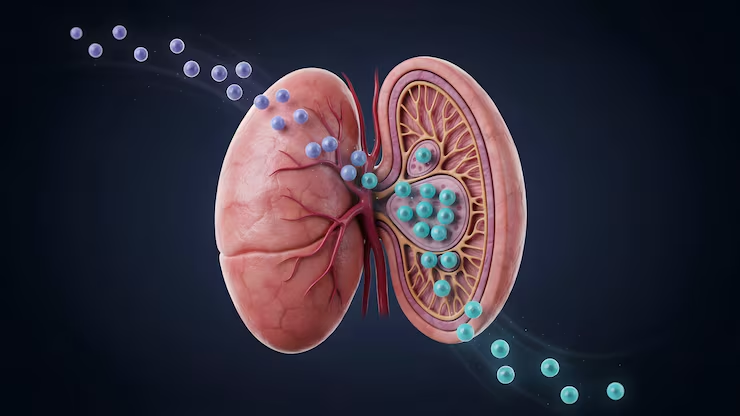
Understanding Your Liver, Kidneys and the Incredible Work They Do Every Day
In Part One of this series, we talked about something most of us rarely stop to consider: everything our bodies have to deal with in the course of an ordinary day. The food we eat, the water we drink, the air we breathe, medications we may take, alcohol we may consume, and the normal byproducts created simply because our bodies are alive and functioning all have to be processed in one way or another.
Fortunately, we aren't left defenseless against any of this.
Our bodies have remarkable systems working around the clock to process nutrients, maintain balance and eliminate substances we no longer need. Two of the most important organs involved in that work are the liver and kidneys.
Most of us know that our liver and kidneys are important. But until something goes wrong, we probably don't spend much time thinking about exactly what they do.
I think that's worth changing.
Because the more we understand about how our bodies work, the more we can appreciate why our everyday health choices matter.
Think About the Filters You Use Every Day
Think about the filters in your home for a moment.
Your furnace or air-conditioning system probably has a filter. Your vacuum cleaner has one. Your car has filters. You may have a filter for your drinking water.
Why do we use them?
Because we understand that keeping systems operating properly requires managing what moves through them.
If you've ever pulled an old filter out of a furnace or air conditioner, you've probably been surprised by what you saw. Dust and debris can accumulate, airflow becomes restricted, and the entire system may have to work differently than it does with proper maintenance.
It's a useful picture for understanding why filtration and processing are so important.
But our bodies are far more sophisticated than an air-conditioning unit.
Our liver and kidneys don't literally become dirty filters covered in muck, and a supplement doesn't simply “wash” them clean. Instead, these are living organs performing thousands of complex biological processes.
So rather than thinking, “I need to clean my liver and kidneys,” I think a better question is:
“What can I do to support these organs while they're doing their jobs?”
That's a much more useful approach to health.
Your Liver Is an Incredible Processing Center
Your liver is one of the hardest-working organs in your body.
Everything it does would fill far more than one article, but one of its major responsibilities is helping your body process nutrients and many of the substances that enter your system.
When you eat, your digestive system breaks food down into components your body can absorb. Those nutrients eventually have to be processed, stored, converted or used.
Your liver plays an important role in that process.
It also helps metabolize many medications and alcohol and participates in processes that transform certain compounds so they can eventually be eliminated from the body.
Your liver also produces bile, which is important for digestion and the absorption of fats.
In other words, the liver isn't simply sitting inside your body waiting until you decide to do a cleanse.
It's working right now.
It was working while you slept last night. It worked during breakfast. It's working while you're reading this article.
And that should give us a different perspective on what it means to support liver health.
Your Kidneys Are Working Too
Now let's talk about another remarkable pair of organs: your kidneys.
Most of us know that kidneys produce urine, but their job is much more sophisticated than that.
Your kidneys continually filter your blood. They help remove waste products and excess water while maintaining the balance of fluids and important minerals your body needs.
Think about how extraordinary that is.
Your internal environment has to remain within relatively narrow ranges for your body to function properly. Too much or too little of certain substances can create problems.
Your kidneys are part of the body's system for maintaining that balance.
And once again, they're doing it automatically.
You don't wake up in the morning and tell your kidneys, “Okay, start filtering now.”
They've already been working.
The Goal Is Balance, Not Simply “Flushing”
This is also why I don't love some of the language we hear around detoxing.
You'll sometimes hear people say they want to “flush everything out.”
But your body isn't trying to flush everything out.
It's trying to maintain balance.
There are substances your body needs to keep and substances it needs to eliminate. There are nutrients that need to remain within certain ranges. Water balance matters. Electrolyte balance matters.
The body isn't a bathtub where you pull a plug and let everything disappear down the drain.
It's a sophisticated biological system constantly making adjustments.
That's one reason we need to be thoughtful with anything that significantly affects bowel movements, urination or fluid balance. More elimination doesn't automatically mean better detoxification.
Our goal should be supporting normal function.
What Happens When the Liver or Kidneys Aren't Working Properly?
This is where the subject becomes much more serious.
If the liver or kidneys become significantly impaired, that's not something a tea or supplement should be expected to fix.
Liver and kidney diseases are medical conditions that deserve proper evaluation and treatment.
This is another reason I believe health education matters.
We shouldn't wait until an organ is struggling before we decide it deserves our attention.
Preventive healthcare matters. Appropriate medical screenings matter. Blood pressure matters. Blood sugar matters. Maintaining a healthy weight matters. What we eat and drink matters.
And if your healthcare provider tells you that your liver or kidneys aren't functioning normally, that's the time for medical guidance—not a do-it-yourself cleanse.
What Can We Do to Support These Systems?
This is where I want the conversation to become practical.
You don't need an extreme program to begin treating your body better.
One of the simplest things you can do is stay adequately hydrated. Water is essential throughout the body and is particularly important for normal kidney function.
Nutrition matters too. Eating a varied diet rich in vegetables, fruits, fiber, quality protein and other nutrient-dense foods gives your body the raw materials it needs.
Movement matters.
Maintaining a healthy weight matters.
Getting enough sleep matters.
Avoiding tobacco matters.
And alcohol deserves particular attention when we're discussing the liver. The liver is responsible for metabolizing alcohol, so how much and how frequently someone drinks matters.
These aren't dramatic interventions.
They're daily habits.
And that's exactly the point.
After 40, Maintenance Starts Looking Different
There's something that tends to happen as we get older.
We start taking maintenance more seriously.
We understand that if we want our car to last, we change the oil. If we want our house to remain in good condition, we maintain it. If we want equipment to keep functioning, we don't wait until it completely breaks before we pay attention to it.
Yet many of us treat our bodies differently.
We ignore them until something hurts.
We ignore our nutrition until our doctor tells us something is wrong.
We ignore sleep until we're exhausted.
We ignore movement until we've lost strength.
And we rarely think about our liver or kidneys unless a blood test gives us a reason.
I think we can do better than that.
Not by becoming obsessed with our health, but by becoming more intentional abou
When I talk about detoxification, this is the picture I want people to have.
Not a dirty organ that needs to be scrubbed clean.
Not a three-day miracle cleanse.
Not a product magically removing everything bad from your body.
Instead, picture your body as an incredibly sophisticated system that's constantly processing, balancing, filtering and eliminating.
Then ask yourself:
What am I doing to support that system?
That's a very different question.
And it's the question that leads us into Part Three.
Because the liver and kidneys aren't working alone. Digestion, regular elimination, nutrition, hydration, sleep and the body's own antioxidant defenses are all part of the bigger picture.
In Detox Blog 3, we'll bring those pieces together and talk about what a healthy approach to supporting the body's natural detoxification processes actually looks like.